
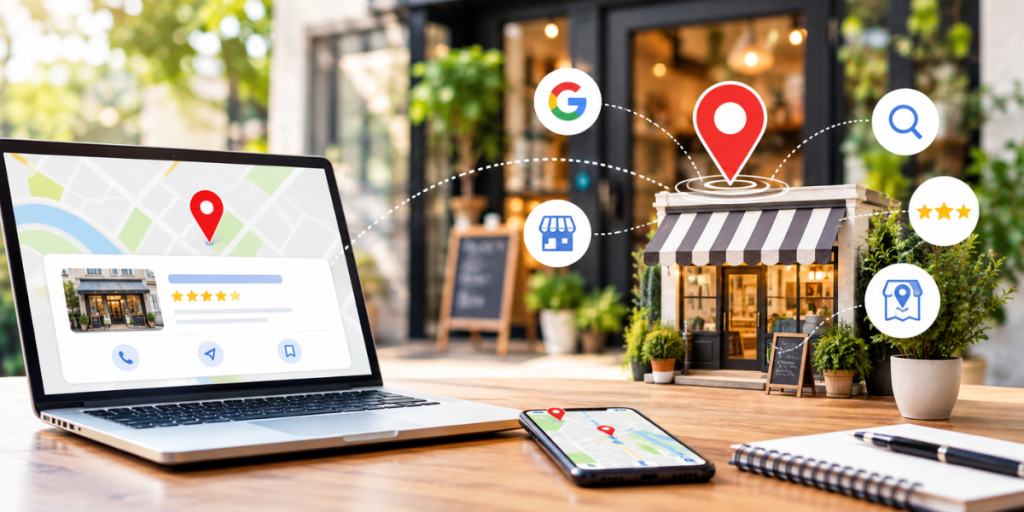
Local SEO for small business is the practice of making your business easy to find in location-based searches, such as "plumber near me" or "home care agency in Austin." It works by sending Google, Google Maps, and AI assistants clear signals about who you are, where you operate, and why people trust you. Those signals come from your Google Business Profile, consistent online listings, location-focused website content, and customer reviews.
Why Local SEO Matters More Than Ever
When someone needs a service nearby, they rarely scroll through pages of results. They look at the map pack, check a few reviews, and call. Increasingly, they also ask AI assistants and answer engines to name the best option in their area.
For a small business, this is good news. You don't need a national budget to win. You need to be the most relevant, the most consistent, and the most trusted business in your service area. That is what local business SEO is built to do.
How Local SEO Works: The Three Ranking Factors
Google has said that local results are based mainly on three factors:
- Relevance: How well your profile and website match what the person searched for.
- Distance: How close your business is to the searcher or the location they named.
- Prominence: How well known and trusted your business is, based on reviews, citations, links, and overall web presence.
You can't change where your business sits, but you can improve relevance and prominence. Every step below targets one or both.
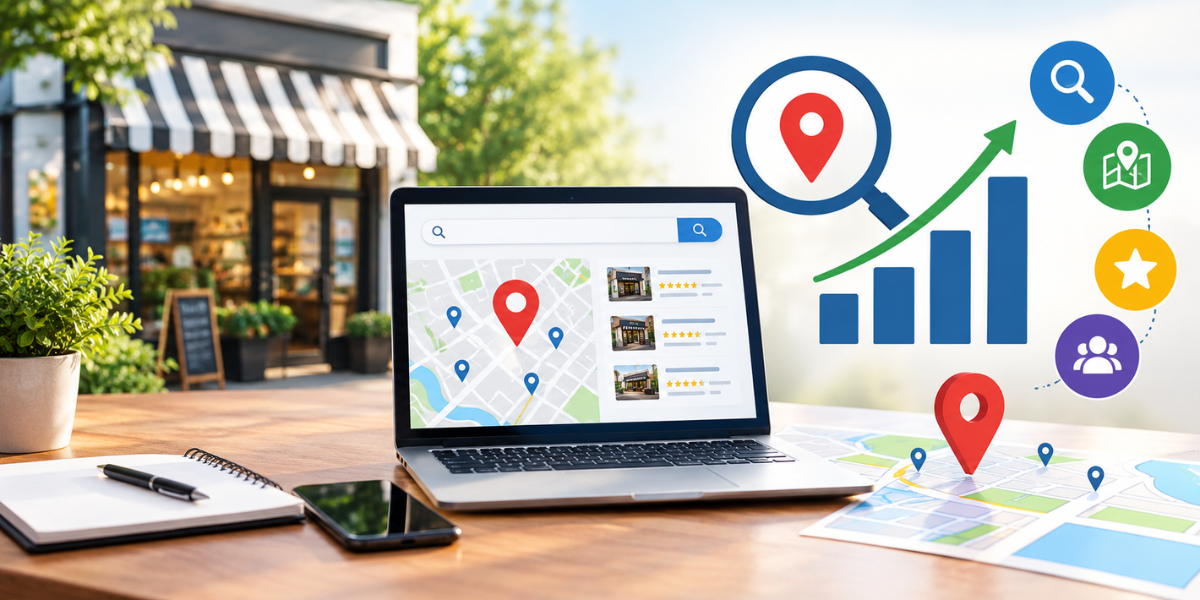
Local SEO vs. Traditional SEO at a Glance
| Factor | Local SEO | Traditional SEO |
| Search intent | Location-based ("near me," city names) | Broad, informational or national |
| Main result type | Map pack, Google Maps, AI local answers | Standard organic listings |
| Top ranking signals | Google Business Profile, reviews, citations, proximity | Content depth, backlinks, technical health |
| Best for | Service-area and storefront businesses | Online-only or national brands |
| Key content | Location pages, local keywords, FAQs | Blog content, guides, pillar pages |
| Typical timeline | Often 3 to 6 months for measurable gains | Often 6 to 12 months |
| Ongoing work | Reviews, posts, listing upkeep | Content production, link building |
Step-by-Step Guide to Local SEO for Small Businesses
Step 1: Claim and Verify Your Google Business Profile
Your Google Business Profile (GBP) is the single most important asset in local search. Claim it, verify it, and fill in every field: business name, address or service area, phone number, hours, website, and a clear description.
Choose a primary category that matches your main service, then add secondary categories for related services. Wrong categories are one of the most common reasons a business fails to appear for the right searches.
Step 2: Add Photos, Posts, and Regular Updates
Profiles that look active tend to earn more engagement. Upload real photos of your team, location, and work. Publish posts about offers, updates, or events on a steady schedule, and keep holiday and special hours current.
Step 3: Build Consistent Citations
A citation is any online mention of your business name, address, and phone number (NAP), including directories, maps, and industry sites. Consistency matters because search engines cross-check these details to confirm you are legitimate.
Make sure your NAP is identical everywhere. Small differences like "Street" versus "St." or an old phone number can create doubt and hurt rankings.
Step 4: Optimize Your Website for Local Search
Your website should state clearly what you do and where you do it. Focus on:
- Title tags and headings that include your service and city
- A dedicated page for each service and each location you serve
- Your NAP in the footer and on the contact page
- An embedded map and clear calls to action
- Local business schema (structured data) so search engines and AI tools can read your details accurately
- Fast load times and a mobile-friendly design
Step 5: Create Localized Content
Content that speaks to your community gives you a real edge. Write about local events, neighborhoods, regulations, and common problems your area faces. Answer the questions customers actually ask, in short, direct paragraphs. This helps you rank and also makes your content easy for answer engines to quote.
Step 6: Earn and Respond to Reviews
Reviews influence both rankings and decisions. Ask satisfied customers for reviews soon after a job is done, make the process simple with a direct link, and respond to every review, positive or negative. Thoughtful replies show future customers that you pay attention.
Step 7: Build Local Links and Mentions
Links and mentions from local sources signal prominence. Sponsor a community event, join the chamber of commerce, partner with nearby businesses, or get featured in local news. Quality matters more than quantity here.
Step 8: Track, Report, and Improve
Local SEO is not a one-time setup. Track profile views, calls, direction requests, map rankings, and website traffic from local searches. Review the numbers monthly and adjust. Search engines update often, and competitors keep working.
Local SEO Checklist: What to Do and How Often
| Task | Priority | How Often |
| Verify and complete Google Business Profile | High | Once, then review quarterly |
| Post updates and photos | Medium | Weekly or bi-weekly |
| Check and fix citations | High | Every quarter |
| Request customer reviews | High | Ongoing |
| Reply to all reviews | High | Within a few days |
| Publish localized content | Medium | Monthly |
| Review analytics and rankings | High | Monthly |
| Update schema and website details | Medium | When anything changes |
How AI Search Changes Local SEO
Search is no longer limited to ten blue links. AI Overviews and generative assistants pull from trusted, well-structured sources to build answers about local providers. To be included, your business needs:
- Accurate, consistent data across your profile, website, and directories
- Clear, quotable answers to common questions on your service pages
- Strong review signals that show real customer experience
- Structured data that helps machines understand your services and location
The foundation is the same as classic local SEO. The difference is that clarity and consistency now matter even more, because AI tools favor information they can verify across several sources.
When to Get Professional Help
Doing local SEO yourself is possible, but it demands steady attention. Many small business owners get stuck on profile optimization, citation cleanup, and content planning because day-to-day operations come first.
An experienced partner can take that off your plate. Wyred Insights' AI-Optimized Local SEO services cover Google Business Profile optimization, localized content, on-page work, citation management, and reputation support. The approach is hands-on, with ongoing adjustments and monthly reporting so you can see what is working and why.
Common Local SEO Mistakes to Avoid
- Inconsistent business details. Different names, addresses, or phone numbers across sites weaken trust.
- Wrong or too few GBP categories. This limits the searches you can appear for.
- Ignoring reviews. Unanswered feedback costs you rankings and customers.
- Thin location pages. Copying the same text and swapping the city name rarely works.
- Expecting overnight results. Local SEO builds over months, not days.
Start With the Basics
If you do only one thing this week, open your Google Business Profile and check that every detail is complete and correct. Then ask your three most recent happy customers for a review. Those two small actions put the core of local SEO for small business into motion, and everything else builds on them.