
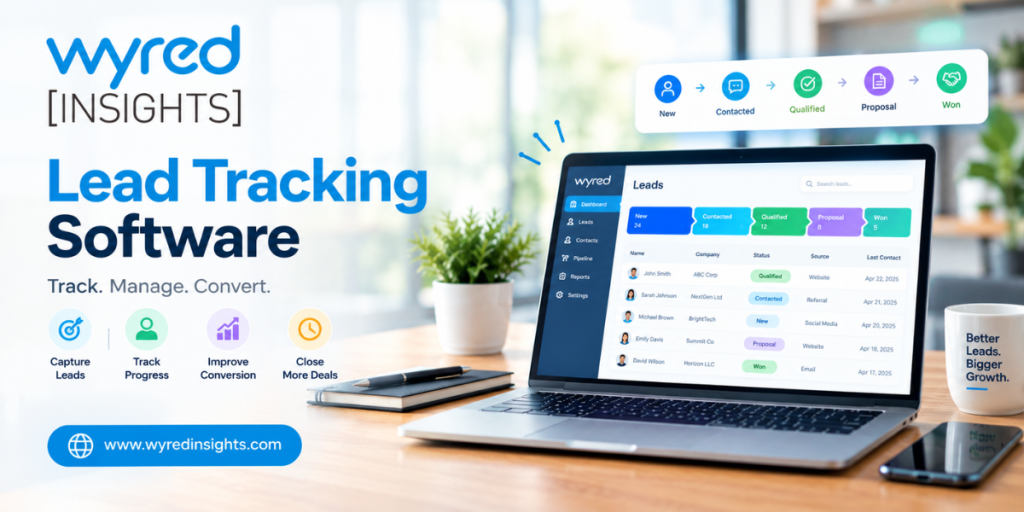
Lead tracking software answers the question most service business owners argue about in budget meetings: which marketing channel actually brings in customers who pay? Google Ads might send the most form fills, while your Google Business Profile quietly sends fewer calls that close twice as often. Without a record that follows each lead from first touch to signed contract, you end up funding the loudest channel instead of the most profitable one. This guide is for owners and marketing leads at home care agencies, delivery providers and other service businesses. It explains how lead tracking works, which metrics separate busy channels from profitable ones, and the data mistakes that quietly ruin the numbers.
What Is Lead Tracking Software?
Lead tracking software records where every lead came from and follows that lead through your pipeline until it becomes a paying customer or drops out. Instead of counting clicks or form fills, it connects a specific person to a specific source and a specific outcome, so you can compare channels by revenue rather than by volume.
The difference from web analytics matters. A tool like Google Analytics counts sessions and conversions on your website. It can tell you that a paid search campaign produced 80 form submissions last month. It can’t tell you that 12 of those people signed a care agreement, that four cancelled in the first month, or that the phone call from a Facebook ad last Tuesday turned into your biggest client of the quarter.
Lead tracking fills that gap. Every inquiry, whether it arrives through a form, a call, a text or a job board, gets a source attached at the moment it enters the system, and that source stays on the record through every stage that follows.
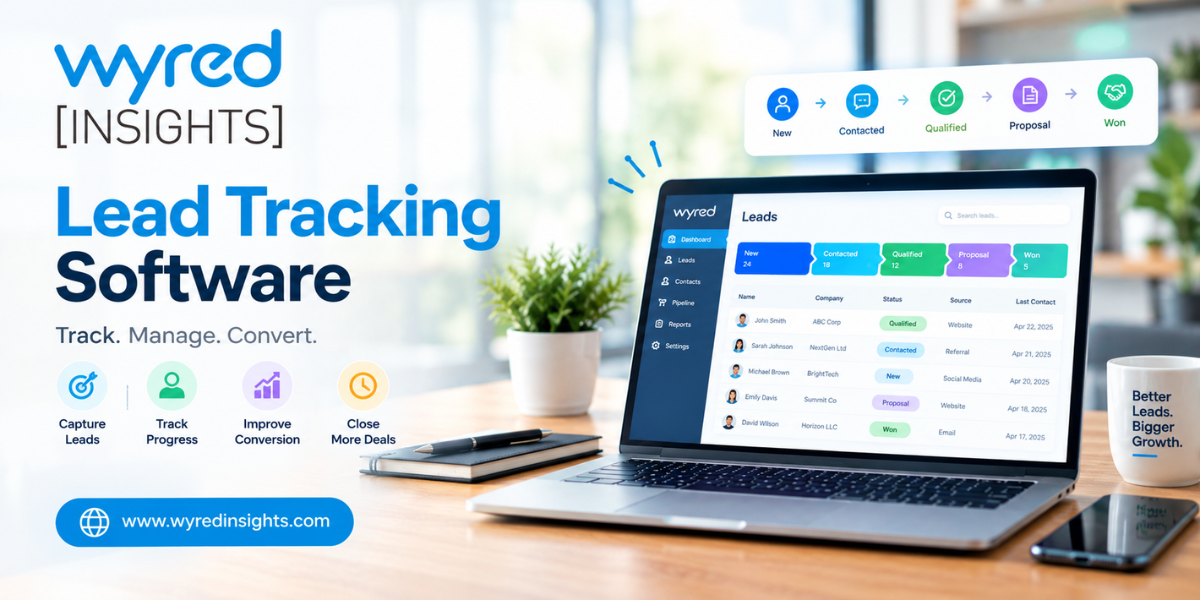
Why Do Most Businesses Get Channel Attribution Wrong?
Most businesses get channel attribution wrong because they measure the top of the funnel and guess the rest. They count leads by source, then rely on memory, a “how did you hear about us?” question or last-click data to decide which channel produced revenue. Calls, referrals and repeat visits slip through, so credit lands on the wrong channel.
The measurement gap is common even among large marketing teams. In Nielsen’s 2024 Annual Marketing Report, a survey of nearly 2,000 global marketers, 84% said they were confident in their ROI measurement, yet only 38% said they evaluate the holistic ROI of their marketing by measuring traditional and digital channels together.
Data quality makes it worse. Validity’s State of CRM Data Management in 2026 report, based on 500 marketing professionals, found that 62% of organizations lose revenue directly because of poor CRM data quality, and nearly a third of teams spend six or more hours a week fixing and reconciling data.
The stakes are real. Gartner’s 2026 CMO Spend Survey of 401 marketing leaders put average marketing budgets at 7.8% of company revenue. For a business spending that share of revenue on marketing, sending even a fifth of it to the wrong channel is an expensive habit.
How Does Lead Tracking Software Connect a Channel to a Paying Customer?
Lead tracking software connects a channel to a paying customer in four steps: it captures the source when the lead arrives, keeps that source attached as the lead moves through the pipeline, records the final outcome and value, and then reports results by source. The chain only works if all four links hold.
Capture the source at the first touch
Every channel needs a way to identify itself. Web forms can read UTM parameters from ad links and store them in hidden fields. Each channel can have its own tracking phone number, so a call from a Google Business Profile listing is logged differently from a call from a billboard. Dedicated landing pages for each campaign make the source obvious from the start.
Keep the source attached through the pipeline
A lead’s original source should never be overwritten when a staff member updates the record. Good systems store “original source” as a locked field and log later touches, such as a remarketing email, as separate events on the same timeline.
Record the outcome and its value
This is the step most teams skip. When a lead becomes a client, the record needs a won status and a revenue figure. When a lead is lost, it needs a lost status and a reason. Without outcomes, you only know which channel is busy.
Report by source
Once outcomes are in, reporting turns into simple division: leads, customers and revenue per channel, set against what each channel costs.
Which Metrics Show That a Channel Brings Paying Customers?
The metrics that show a channel brings paying customers are close rate by source, cost per customer and revenue per customer by source. Lead volume and cost per lead are useful early signals, but they reward channels that produce cheap, low-intent inquiries. Judge channels on customers and revenue, then use lead metrics to diagnose why a channel is underperforming.
| Metric | What it tells you | Common trap |
|---|---|---|
| Leads by source | Which channels create demand | Rewards high volume, low-intent sources |
| Cost per lead | Efficiency of getting inquiries | Cheap leads that never close look good |
| Lead-to-appointment rate | Quality of fit and speed of follow-up | Slow follow-up gets blamed on the channel |
| Close rate by source | Which channels send buyers | Small samples swing wildly month to month |
| Cost per customer | True acquisition cost per channel | Ignored when only ad spend is counted |
| Revenue per customer | Long-term value each channel brings | Needs outcome data most teams never record |
Here’s a hypothetical example. A home care agency spends $3,000 a month on paid search and gets 100 leads at $30 each. It also spends $600 a month on Google Business Profile optimization and gets 30 leads at $20 each. Paid search closes 5 clients, so each one costs $600. The profile closes 9, at about $67 each. On a lead report, paid search looks like the clear winner. On a customer report, it’s the other way around.Before cutting a channel, check its lead-to-appointment rate. A channel with good leads and poor results is often a follow-up problem, not a marketing problem. That’s also worth checking before you change bids or budgets in your paid media optimization work.
Do You Need Lead Tracking Software and a Marketing CRM?
A marketing CRM manages relationships and campaigns over time, while lead tracking is the attribution layer that ties each record to its original source and final outcome. You need both functions, but not necessarily two tools. Many platforms combine them, which avoids exporting data between systems and losing source details along the way.
The test is simple. Open any won customer in your system and ask two questions: where did this person first come from, and how much are they worth? If your CRM can answer both without a spreadsheet, it already handles lead tracking. If it can’t, the source data is getting lost somewhere between the first touch and the signed contract.
What Mistakes Make Lead Tracking Data Unreliable?
Lead tracking data becomes unreliable when sources are typed in by hand, when phone calls bypass the system, when staff overwrite the original source, or when lost leads are never closed out. Each mistake shifts credit toward the wrong channel. The fix is to automate source capture and make outcome updates part of everyone’s routine.
The most common problems we see in service businesses:
- Free-text source fields. “Google,” “google ads,” “GMB” and “internet” become four sources for two channels.
- One phone number everywhere. Calls, often the highest-intent leads, end up with no source at all.
- Self-reported source only. People often remember the last thing they saw, not what first brought them in.
- Open leads that never close. Stale records inflate pipeline value and hide which sources go nowhere.
The same discipline applies to hiring. Applicants come from job boards, social ads and referrals, and the cheapest source of applicants is rarely the cheapest source of hires who stay. Wyred Insights tracks figures like landing page conversion rate and cost per hire by channel next to client pipeline data for exactly this reason. If you want a starting point for weekly reporting, our guide to the KPIs owners track weekly covers which numbers to review and how often.
Stop losing leads to slow follow-up
See how instant replies, automated follow-up and self-scheduling keep every inquiry warm, day or night.