
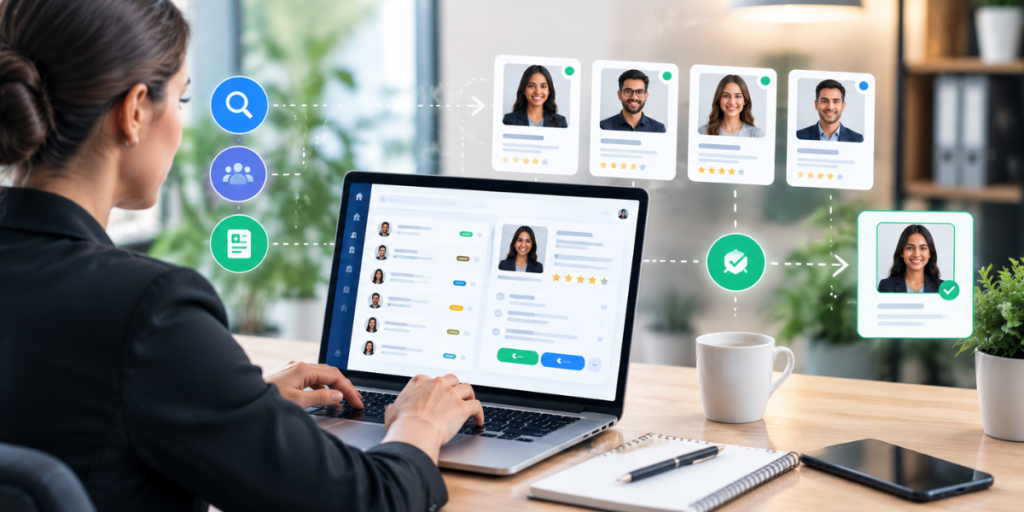
Digital recruiting software exists because most hiring delays have nothing to do with a shortage of applicants. They happen in the gaps: an application sits unread overnight, a recruiter spends Tuesday calling people who never qualified, an interview gets booked three days out and the candidate takes another job in the meantime. For high-volume employers like home care agencies and delivery service providers, those gaps add up to empty shifts and lost revenue. This guide explains what digital recruiting software does, how it differs from a standard applicant tracking system, and the specific steps where it shortens time to hire.
What Is Digital Recruiting Software?
Digital recruiting software is a platform that attracts, screens, schedules and follows up with job applicants automatically. It combines job advertising, qualifying questions, candidate messaging, interview booking and reporting in one system, so recruiters spend their time talking to qualified people instead of sorting applications and chasing replies by hand.
Most platforms cover the full front end of hiring. A candidate sees a job ad, lands on a short application, answers a few eligibility questions, and either receives an interview slot right away or a polite notice that they don’t meet the requirements. Reminders go out before the interview, and every step is logged on a dashboard.
That last part matters more than it sounds. When you can see where applicants come from and where they drop out, you can move ad spend to the channels that actually produce hires.
How Is Digital Recruiting Software Different From an Applicant Tracking System?
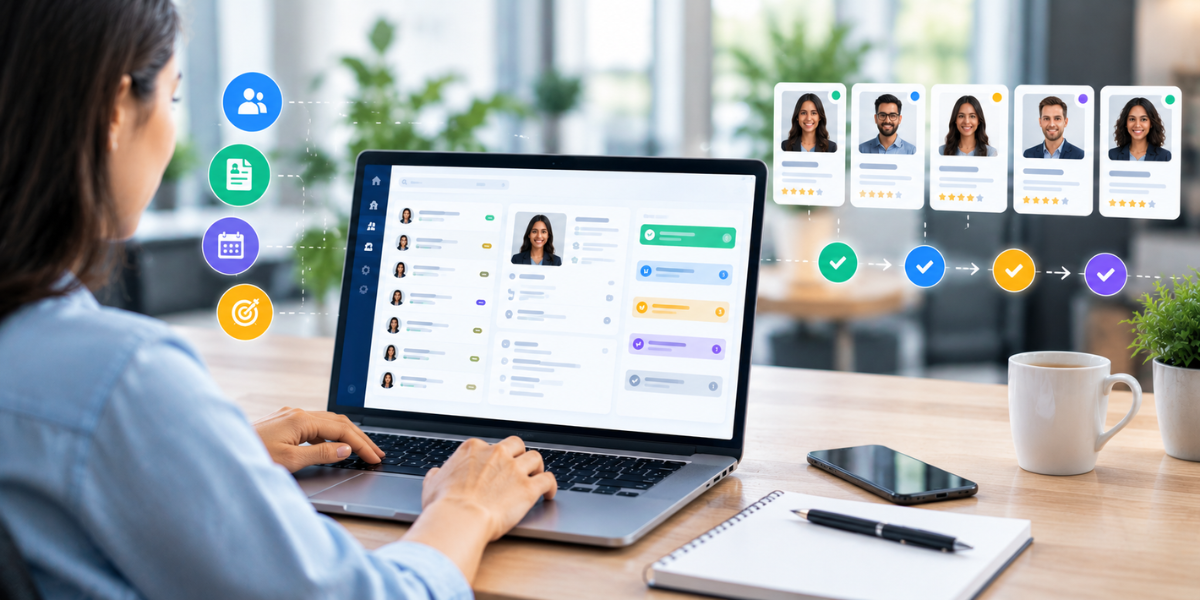
An applicant tracking system stores and organizes candidates after they apply, moving them through pipeline stages. Digital recruiting software does that too, but it also handles the work before and around the pipeline: advertising the job, screening applicants automatically, booking interviews and following up. An ATS records the process, while recruiting software actively runs it.
Many employers already own an ATS and still struggle with speed, because the system waits for a person to act. Someone has to open each application, decide whether it qualifies, send the first message and find a time that works. In a small agency where the recruiter is also the scheduler and office manager, those tasks slip.
If you’re weighing the two, our breakdown of what an applicant tracking system covers is a useful starting point. The short version: an ATS is a filing system, and digital recruiting software adds the automation layer that keeps candidates moving.
Where Does Time to Hire Actually Get Lost?
Time to hire is usually lost in four places: slow first contact, manual screening, interview scheduling back-and-forth and missed follow-up. Each delay seems small on its own, but together they stretch a hiring cycle by days or weeks, and candidates in high-turnover roles rarely wait that long before accepting another offer.
The scale of the problem shows up in national data. SHRM’s 2026 Recruiting Benchmarking research, based on more than 4,600 organizations, put the median time to fill nonexecutive positions at 39 calendar days. SHRM’s 2025 Talent Trends research found 41% of organizations reporting rising candidate ghosting, and 51% said they receive too few applicants.
The table below shows where the hours go in a typical manual process and how automation changes each stage.
| Hiring stage | Manual process | With automation |
| First contact | Recruiter reviews applications when time allows, often next day | Instant confirmation by text or email the moment someone applies |
| Screening | Phone calls to check basic eligibility | Qualifying questions filter out ineligible applicants automatically |
| Scheduling | Back-and-forth calls and emails to find a time | Candidate books an open slot immediately |
| Reminders | Often skipped, leading to no-shows | Automatic reminders the day before and day of the interview |
| Reporting | Spreadsheets updated manually, if at all | Live dashboard by source, stage and cost |
How Does Digital Recruiting Software Cut Time to Hire?
Digital recruiting software cuts time to hire by removing waiting time between steps. It responds to applicants instantly, screens out unqualified candidates before a recruiter gets involved, lets qualified candidates book interviews on the spot and sends reminders that reduce no-shows. The hiring decision still belongs to a person, but the delays around it disappear.
Speed of first contact is the biggest lever. Many hourly candidates apply from a phone between shifts and apply to several jobs at once. A text-to-apply flow that replies within seconds keeps your opening at the top of their list.
Scheduling is the second. Automated interview scheduling lets a qualified applicant pick a time right after screening, instead of waiting for a call back. Reminders then protect that slot.
Screening is the third. Short eligibility questions about certifications, driver’s licenses or availability stop recruiters from spending phone time on applicants who could never be hired.
Here’s what that looks like in practice. In one Wyred Insights case study, a home care agency needed certified home health aides quickly. Using targeted ads, qualifying questions and automated outreach, the campaign produced 16 certified HHA applicants in two days at about $6 per qualified applicant. That’s one company’s reported result rather than an industry benchmark, but it shows how much faster the front of the funnel can move.
What Should You Look for Before Choosing One?
Look for a recruiting platform that matches how your candidates actually apply. For hourly and high-turnover roles, that means mobile-friendly applications, text messaging, automatic screening questions, instant interview booking, reminders and reporting by source. Also check whether it replaces or works alongside your existing applicant tracking system.
A few practical questions help narrow the field. Can candidates apply in under five minutes on a phone? Can you edit screening questions yourself as requirements change? Does reporting show cost per qualified applicant, not just total applicants? And who builds the job ads and campaigns, you or the provider?
That last question separates software from service. Some teams have time to run campaigns themselves. Others, especially small agencies without a dedicated recruiter, get better results from digital recruiting software paired with strategy support, where someone sets monthly hiring targets and adjusts channels based on what the data shows.
Faster hiring rarely comes from working harder. It comes from closing the gaps between steps, so qualified people hear back in minutes instead of days. Map how long each stage takes in your current process, and start by automating the slowest one.